

You probably don’t think about your ovaries unless something feels off. That subtle ache. The bloating that doesn’t go away. Could it be something more?
Understanding the early signs of ovarian cysts can help you catch problems before they get worse. Most cysts are harmless. But some can grow, rupture, or twist, causing serious issues if left unchecked.
Let’s break down what you need to know.
What Are Ovarian Cysts?
Ovarian cysts are fluid-filled sacs that form on or inside your ovaries. Most women will have at least one during their lifetime, especially during childbearing years.
Many go unnoticed and resolve on their own. Others grow larger or cause symptoms that interrupt your life. That’s where it helps to know the signs.
1. Pelvic Pain or Pressure: One of the Most Common Signs of Ovarian Cysts
You might feel a dull ache or sharp jabbing sensation on one side of your lower abdomen.
How It Feels
- Pain may be sudden or come and go.
- It can worsen during your period or after sex.
- Often felt in the lower pelvis, near the ovaries.
Pain that’s intense or doesn’t go away needs attention. Especially if it’s new, one-sided, or paired with other symptoms.
2. Bloating or Fullness in Your Abdomen
That tight, swollen feeling in your belly could be more than gas or PMS.
A Telltale Sign
- You feel full even when you haven’t eaten much.
- Your clothes feel tighter around the waist.
- The bloating lingers for days, not just hours.
This kind of pressure can happen when a cyst pushes against your organs or fills with fluid.
3. Unusual Menstrual Changes
Notice changes in your period that don’t fit your usual pattern? That could be your body waving a red flag.
Signs to Watch
- Heavier or lighter bleeding than normal
- Irregular cycles or missed periods
- Bleeding between cycles
Some ovarian cysts mess with hormone production, which can disrupt your regular flow.
4. Pain During Sex
If intercourse suddenly becomes painful, especially deep penetration, it could be caused by a cyst pressing against internal tissues.
What You Might Feel
- Sharp pain during or right after sex
- Cramping that lingers
- Discomfort on just one side of your pelvis
Don’t ignore this. Sex should never be painful, and if it is, it deserves a closer look.
5. Frequent Urination or Difficulty Emptying Your Bladder
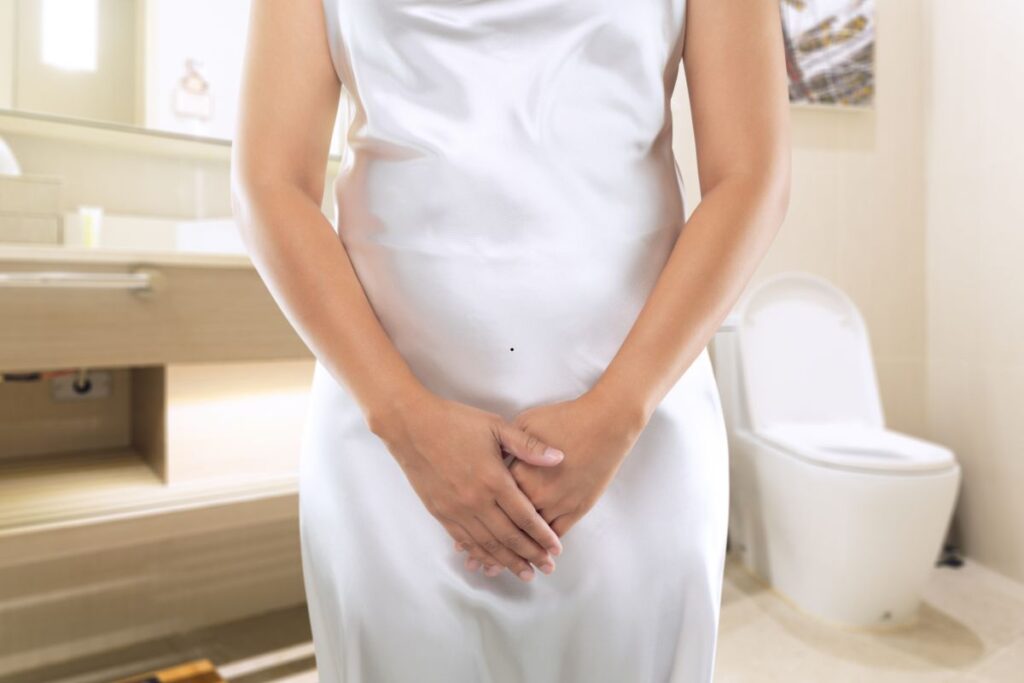
A cyst that grows large enough can press on your bladder.
What Happens
- You feel like you have to pee all the time.
- You rush to the bathroom, but only go a little way
- There’s pressure or urgency without a urinary tract infection.
This symptom mimics a UTI, but with no bacteria involved.
6. Lower Back or Thigh Pain
You might not associate leg or back discomfort with your ovaries, but they share nerve pathways.
Pain Patterns
- A dull ache in your lower back
- Throbbing or pulling sensation in your thighs
- The pain may radiate from your pelvic region.n
If you’re dealing with these aches without another clear reason, a cyst could be to blame.
7. Nausea or Vomiting
This isn’t the most common symptom, but it becomes more likely if a cyst twists (called ovarian torsion) or ruptures.
When It Becomes Serious
- Nausea paired with sharp pelvic pain.
- Dizziness, fever, or weakness
- Vomiting with severe discomfort
This is a medical emergency. If you’re doubled over in pain with nausea, seek help right away.
What Causes Ovarian Cysts?
Understanding the root can help you manage your risk.
Types of Cysts
- Functional cysts (most common, usually harmless)
- Dermoid cysts (contain tissue like hair or fat)
- Cystadenomas (fluid-filled and can grow large)
- Endometriomas (linked to endometriosis)
- Polycystic ovaries (multiple small cysts from hormone imbalance)
Risk Factors
- Hormonal imbalances
- Pregnancy
- Endometriosis
- Pelvic infections
- Previous cysts
When Should You See a Doctor?
Even if symptoms seem mild, don’t wait too long. Early detection is key.
Seek medical help if you have:
- Sharp, sudden pelvic pain
- Pain with fever or vomiting
- Irregular bleeding lasting more than two cycles
- A bloated belly that doesn’t go down
Your doctor may recommend a pelvic exam, ultrasound, or blood tests like CA-125 to rule out more serious concerns.
Treatment Options for Ovarian Cysts

Watch and Wait
- Small cysts often disappear on their own
- Regular monitoring with ultrasounds
Medications
- Birth control pills to regulate hormones
- Pain relievers for discomfort
Surgery
- Laparoscopy for small or suspicious cysts
- Laparotomy for large or potentially cancerous cysts
The goal is to treat early, before complications arise.
FAQs: Signs of Ovarian Cysts
1. Can you have ovarian cysts without symptoms?
Yes, many are “silent” and discovered during routine checkups or imaging tests.
2. Do ovarian cysts go away on their own?
Most functional cysts resolve in a few weeks without treatment. Others may need medical care.
3. Is bloating always a sign of ovarian cysts?
Not always. But bloating that lingers and isn’t tied to food or your cycle could be a sign.
4. What does an ovarian cyst feel like?
You might feel a dull ache, sharp pain, or pressure in your lower abdomen or pelvis.
5. Can ovarian cysts affect fertility?
Certain types, like endometriomas or PCOS-related cysts, can affect ovulation and fertility.
6. Can ovarian cysts cause weight gain?
Not directly. But bloating or hormone-related changes might cause temporary weight fluctuation.
7. Are ovarian cysts always dangerous?
Most are benign and harmless. But some can rupture, twist, or indicate a bigger issue—so don’t ignore symptoms.
Conclusion
Your body sends signals for a reason. The signs of ovarian cysts often start quietly—an ache, a cramp, a skipped period. But paying attention early can make all the difference.
Don’t brush off persistent bloating, pelvic pain, or changes in your cycle. The earlier you act, the easier it is to treat.


